Car Accident Claims
How to File a Comprehensive Insurance Claim (Hail, Flood, Theft, and Animal Strikes)
Comprehensive coverage pays for hail, flood, theft, vandalism, fire, falling objects, and animal strikes — but not collisions. Here is exactly what qualifies, how to file, and what it does to your rate.
By Crash & Cover Editorial Team · June 21, 2026 · 11 min read
Key Takeaways
- Comprehensive covers non-collision events: hail, flood, fire, theft, vandalism, falling objects, and animal strikes. It does not cover damage from hitting another vehicle or object — that is collision coverage.
- Hitting a deer is a comprehensive claim. Swerving to miss a deer and hitting a tree is a collision claim. The distinction matters for your deductible and your rate impact.
- According to State Farm and the Insurance Information Institute, U.S. drivers filed an estimated 1.7 million animal-collision insurance claims between July 2024 and June 2025, with October through December being the peak months.
- Comprehensive claims are generally treated as "no-fault" events. A single claim usually does not raise your rate — though multiple claims in a short period can.
- Comprehensive coverage is optional and is not required by state law, but lenders and lease companies almost always require it.
What does comprehensive coverage actually pay for?
The NAIC defines comprehensive coverage as protection for damage to your vehicle from causes other than a collision — including fire, severe weather, vandalism, floods, and theft. It also covers broken glass and windshield damage. Common covered events include:
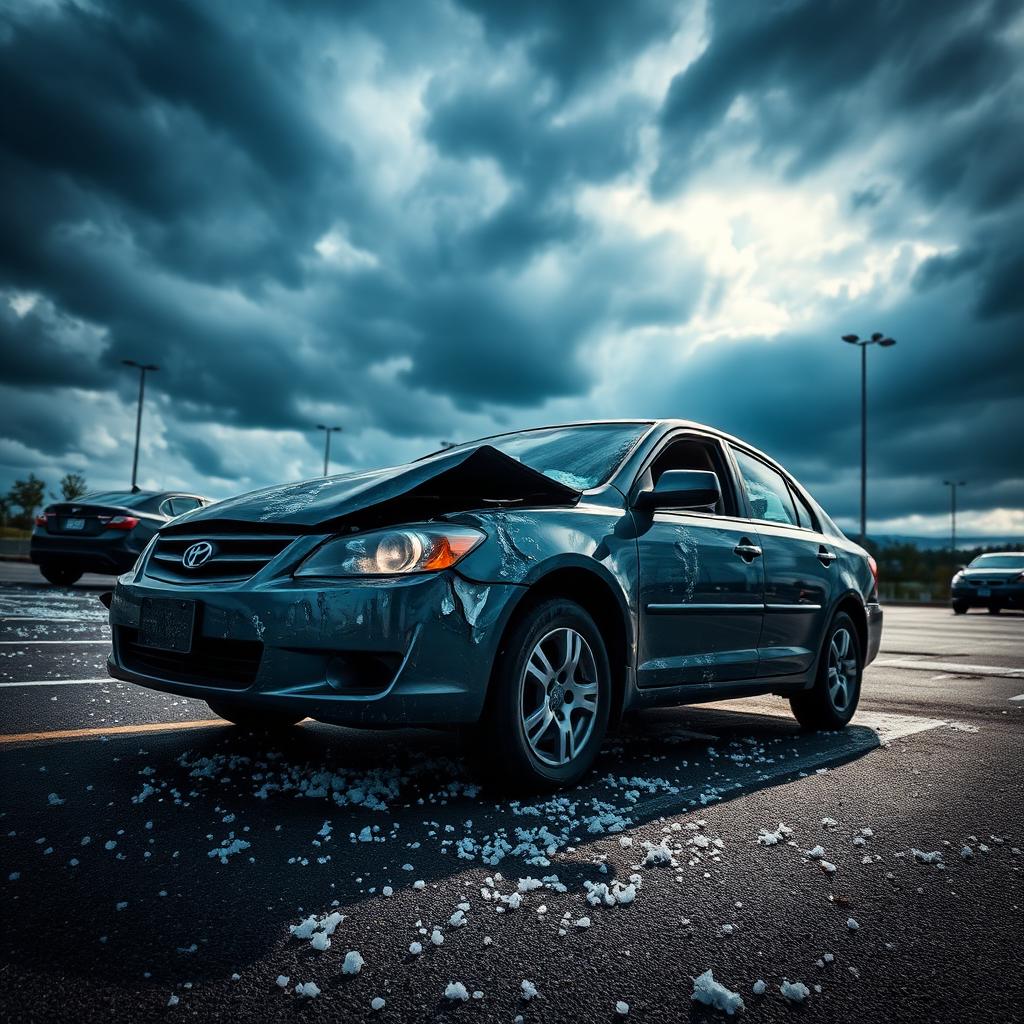
- Hail damage — dents, cracked windshields, and chipped paint from hailstones.
- Flooding — water damage from storms, flash floods, or rising water levels (note: your homeowners flood policy does not cover your car).
- Theft — a stolen vehicle that is not recovered, or damage from a break-in.
- Vandalism — keyed paint, smashed windows, or slashed tires.
- Fire — whether from a wildfire, an engine fire, or arson.
- Falling objects — tree branches, construction debris, or rocks.
- Animal strikes — hitting a deer, bird, or other animal on the road.
Comprehensive vs. collision — why the difference matters
The two coverages have separate deductibles, and in many cases separate rate impacts. The critical distinction:
- You hit a deer → comprehensive claim. You pay your comprehensive deductible.
- You swerve to miss a deer and hit a guardrail → collision claim. You pay your collision deductible. Your rate impact is typically larger.
This is one of the most commonly misunderstood rules in auto insurance. If the animal and your vehicle make contact, it is comprehensive. If you avoid the animal but strike something else, it is collision. For a full breakdown of what each coverage pays for, see our guide to what each auto insurance coverage actually covers.
Will a comprehensive claim raise my rate?
In most cases, a single comprehensive claim does not significantly raise your premium. Insurers generally treat hail, theft, and animal strikes as events outside your control — unlike an at-fault collision. However, there are exceptions:
- Multiple comprehensive claims in a short period (for example, two hail claims and a theft within 18 months) can trigger a rate increase or even non-renewal.
- Some states and insurers treat windshield-only claims differently — often with no rate impact and sometimes with a zero-deductible glass option.
- A comprehensive claim that results in a total loss still goes on your CLUE report and may show up when you apply with a new insurer.
If the damage is minor and close to or below your deductible, consider paying out of pocket to avoid adding a claim to your record. For the full math on when to file vs. when to skip, see our guide on common car insurance claim mistakes.
How to file a comprehensive claim — step by step
- Document the damage immediately. Photograph every angle — wide shots of the full vehicle, close-ups of each damaged area, and the surrounding scene (hailstones on the ground, flood-water marks, broken glass from a break-in). Video helps. Date-stamp everything.
- File a police report if applicable. Theft, vandalism, and hit-and-run damage (where your parked car was struck) typically require a police report for the claim. Many insurers require one for any comprehensive claim above a certain threshold.
- Contact your insurer promptly. Call or file through your insurer's app. Have your policy number, the police report number (if any), and your photos ready. For the full process, see our guide on how to file a car insurance claim.
- Get a repair estimate. Your insurer will arrange an appraisal (in person or via photo upload). If you disagree with the estimate, get an independent body-shop quote and submit it as a supplement.
- Pay your deductible and authorize repairs. Your comprehensive deductible applies. The insurer pays the rest, either directly to the shop or to you.
- If the car is totaled, the insurer pays the vehicle's actual cash value minus your deductible. If you owe more than the car is worth, gap insurance covers the difference.
Animal strikes — what every driver should know
Animal collisions are one of the most common comprehensive claims in the country. State Farm's most recent data, cited by the Insurance Information Institute, estimated 1.7 million animal-collision claims between July 2024 and June 2025. Deer accounted for the majority. West Virginia, Montana, Wisconsin, Michigan, and Pennsylvania consistently rank as the highest-risk states.
Peak season is October through December, during the deer mating season, with November being the single highest month. Dusk and dawn are the riskiest times of day.
If you hit an animal:
- Pull over safely and turn on hazard lights.
- Do not approach the animal — it may be injured and dangerous.
- Call the police if the animal is blocking traffic or if you need a report for your claim.
- Photograph the scene, the animal (from a safe distance), and all vehicle damage.
- Check for hidden damage — leaking fluids, loose parts, tire damage, and broken lights — before driving.
- File your comprehensive claim promptly.
Hail damage — timing and special deductibles
Hailstorms can leave dozens of dents across a vehicle in minutes. A few things to know before you file:
- Your standard comprehensive deductible applies. Some insurers in hail-prone states offer a separate, higher "weather deductible" — check your declarations page.
- If the hail damage is severe enough that repair costs exceed roughly 70–80% of the car's value, the insurer may declare it a total loss.
- Get your own body-shop estimate in addition to the insurer's. Hail repair (paintless dent repair or PDR) is a specialty — shops experienced with PDR often quote differently than general body shops.
- File quickly. Some policies have a time limit for reporting weather-related damage, and waiting too long makes it harder to prove the damage came from a specific storm.
Theft claims — what the insurer needs
- A police report — this is almost always required for theft claims.
- Proof of ownership (title, registration).
- Both sets of keys, if you have them — the insurer may ask to rule out fraud.
- A list of personal items stolen from the vehicle (these are generally covered by your homeowners or renters policy, not your auto policy).
If the vehicle is not recovered within a set period (typically 30 days), the insurer pays the actual cash value minus your deductible. If it is recovered but damaged, the insurer covers the repair costs.
When is comprehensive coverage worth carrying?
Comprehensive is optional — no state requires it. But your lender or lease company almost certainly does. Beyond that, the decision depends on your vehicle's value and your risk exposure:
- Worth carrying: if your vehicle is worth significantly more than a few thousand dollars, if you live in a hail-prone or high-theft area, if you park outdoors, or if you drive in rural areas with heavy deer populations.
- Consider dropping it: if your vehicle's value is low enough that the annual premium for comprehensive exceeds about 10% of the car's worth — at that point, you are paying more in premiums than you could ever collect. See our full coverage vs. liability decision guide for the full math.
Frequently asked questions
Is hitting a deer covered by comprehensive or collision insurance?+
Hitting a deer is a comprehensive claim. However, if you swerve to avoid a deer and hit a tree, guardrail, or another vehicle instead, that is a collision claim — which typically carries a different deductible and a larger potential rate impact.
Will filing a comprehensive claim raise my insurance rate?+
A single comprehensive claim usually does not raise your rate significantly, since events like hail, theft, and animal strikes are considered outside your control. However, filing multiple comprehensive claims in a short period can lead to a rate increase or non-renewal.
Does comprehensive coverage pay for flood damage to my car?+
Yes. Flood damage from storms, rising water, or flash floods is covered under comprehensive. Note that your homeowners flood insurance does not cover your vehicle — only your auto comprehensive policy does.
What if the repair cost from hail exceeds my car's value?+
If repair costs exceed roughly 70–80% of your car's actual cash value (the exact threshold varies by state and insurer), the insurer will likely declare your vehicle a total loss and pay the actual cash value minus your deductible.
Do I need a police report to file a comprehensive claim?+
For theft and vandalism, yes — almost every insurer requires a police report. For weather damage like hail or flooding, a police report is usually not required, but documenting the damage with dated photos and filing promptly is important.
Continue reading
Sources
Have you ever filed a car insurance claim?
Share your experience or send us a tip — we read every email, and your input helps shape what we cover next.
Send us your storyMore from Crash & Cover

How to File a Claim Against the Other Driver's Insurance
If another driver caused your accident, you can file a third-party claim directly with their insurer. Here's how the process works, what to expect, and when to involve your own insurance.
Crash & Cover Editorial Team · Jul 3, 2026 · 8 min

What Is a Diminished Value Claim — and Can You File One?
Even after perfect repairs, a car with an accident on its history is worth less. Here's how diminished value claims work, who qualifies, and how to push back on low offers.
Crash & Cover Editorial Team · Jun 15, 2026 · 11 min

What Is Subrogation in a Car Insurance Claim?
Subrogation is when your insurer steps into your shoes to recover what it paid from the at-fault driver. Here's what it means, why it matters, and how it affects your claim.
Crash & Cover Editorial Team · Jun 14, 2026 · 9 min