Car Accident Claims
Common Car Insurance Claim Mistakes to Avoid — And What to Do Instead
Most drivers make the same costly car insurance claim mistakes without realizing it — and quietly lose thousands. Here are the ten most common errors, why they happen, and exactly what to do instead.
By Crash & Cover Editorial Team · June 2, 2026 · 17 min read
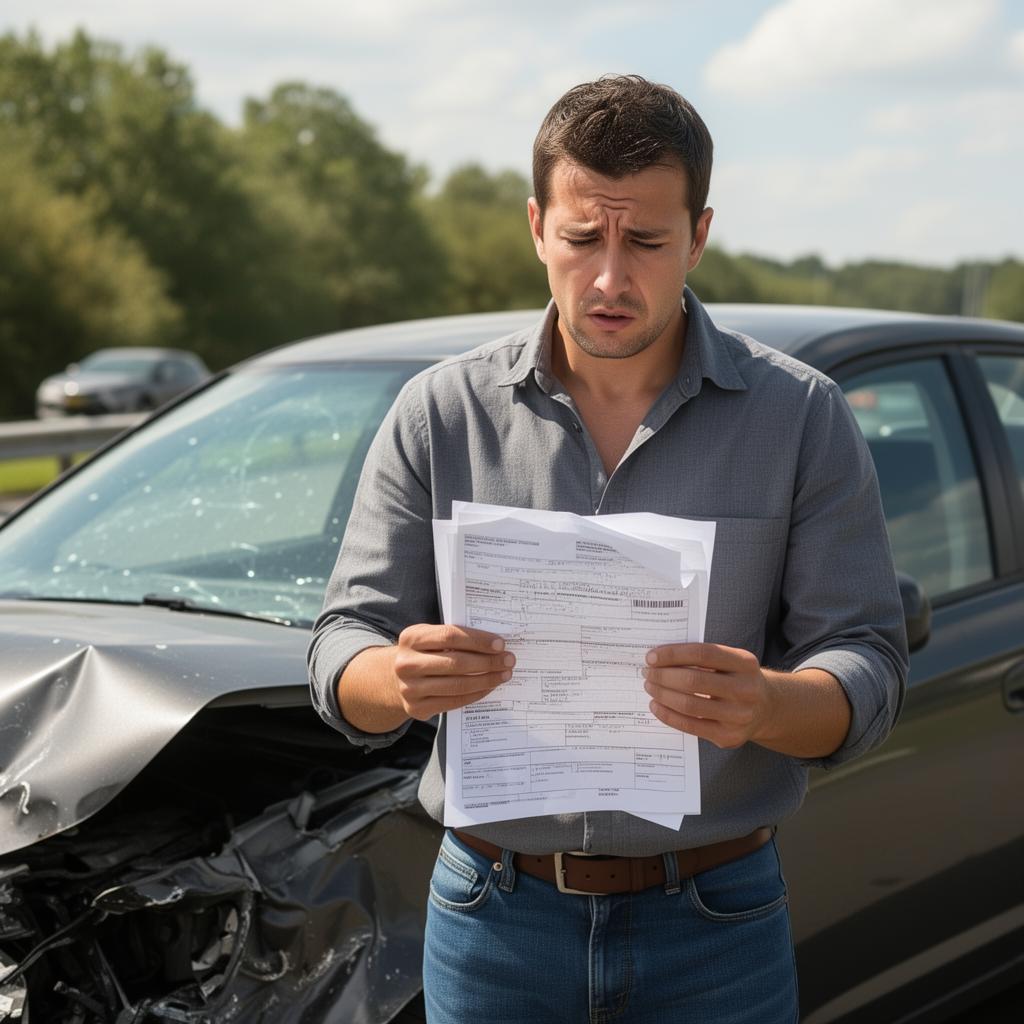
Let me be honest with you about something.
Most of the advice you find online about car insurance claims is either written by the insurance companies themselves, or it glosses over the details that actually matter when you are sitting in a damaged car on the side of the road, heart pounding, trying to figure out what to do next.
We have spent a lot of time looking at how car accident claims actually play out — not how insurance companies say they work, but how they really work for a real person with real injuries and real bills. The same mistakes come up over and over.
Predictable, avoidable car insurance claim mistakes that cost drivers thousands of dollars — sometimes tens of thousands — not because they were dishonest or uninformed, but simply because nobody ever told them what not to do.
That changes today. Here are the most common — and most costly — car insurance claim mistakes drivers make, why they happen, and exactly what to do instead.
Mistake 1 — Saying "I'm Fine" at the Scene
Picture this. You have just been in a car accident. The other driver gets out, looks at the damage, and asks if you are okay. You say, "Yeah, I think I'm fine."
It feels like the polite thing to say. Maybe you genuinely feel okay in that moment. The adrenaline is still pumping. You are shaken but not obviously hurt.
Here is the problem. That moment — those three words — can seriously damage your insurance claim.
Adrenaline is remarkably effective at masking pain. Whiplash, soft tissue injuries, concussions, and even some internal injuries frequently produce no obvious symptoms for 24 to 72 hours after an accident. By the time the pain kicks in and you realize you need medical attention, you have already told multiple people — possibly including an insurance adjuster — that you felt fine.
The adjuster will use that statement. They will argue that if you were genuinely injured, you would not have said you felt fine immediately after the accident. It sounds unreasonable when you lay it out like that, but it works — and insurance companies use it regularly. For a complete hour-by-hour playbook on the critical period after a crash, see our guide on the first 72 hours after a car accident.
What to do instead: When anyone asks how you are feeling after an accident, say this and only this: "I'm still being evaluated." That is it. It is honest — you genuinely do not know the full extent of your condition yet — and it protects your claim.
Mistake 2 — Skipping the Doctor
This is one of the most damaging mistakes drivers make, and it happens constantly.
A driver is in an accident. They feel shaken but not seriously hurt. They think to themselves, "I'll see how I feel in a couple of days." Two days later, they can barely turn their neck. They go to the doctor, get diagnosed with whiplash and a soft tissue injury, and file an insurance claim.
The insurance company's response? "There is a two-day gap between the accident and your first medical visit. If your injuries were caused by this accident and were serious, you would have sought treatment immediately."
That argument — infuriating as it is — is devastatingly effective at reducing claim payouts. The gap in treatment becomes evidence that either your injuries were not serious, or they were not caused by the accident.
The reality is that many people skip the doctor because they genuinely feel okay at first, because they do not want to make a big deal out of what seems like a minor accident, or because they are worried about medical bills. I understand all of those reasons. But the financial cost of that gap in treatment almost always far exceeds the cost of the initial medical visit.
What to do instead: See a doctor the same day as the accident, or the following morning at the absolute latest. Go to an urgent care center if your regular doctor cannot see you immediately. Tell them you were in a car accident and describe every single symptom you are experiencing — no matter how minor it seems. Let them create a medical record that directly connects your condition to the accident.

Mistake 3 — Giving a Recorded Statement Too Soon
The other driver's insurance company calls within 24 hours of the accident. The adjuster is friendly, sympathetic, and professional. They explain that they just need a quick recorded statement to process the claim.
Most drivers agree. They figure they have nothing to hide and want to cooperate.
Here is what they do not realize. A recorded statement made in the first day or two after an accident — before you fully understand your injuries, before you have the police report, before you have had a chance to organize your thoughts — is one of the most effective tools insurance companies have for minimizing payouts.
You might say something as innocent as "It happened really fast" or "I'm not sure exactly what I saw" — and those statements can be used to cast doubt on your account of what happened. You might underestimate your pain level because the full extent of your injuries has not yet developed. Any inconsistency between your recorded statement and later documentation can be used to question your credibility.
The short answer here is simple. You are not legally required to give a recorded statement to the other driver's insurance company. Not now, not ever.
What to do instead: Tell the adjuster politely but firmly that you are not in a position to give a recorded statement at this time. Say: "I am still gathering information and being evaluated by a doctor. I will be in touch once I have had a chance to review everything." Then follow up in writing.
Mistake 4 — Accepting the First Settlement Offer
Let's be honest here. When you receive a settlement offer after weeks or months of dealing with insurance companies, medical appointments, and financial stress, the temptation to just accept it and move on is completely understandable.
Insurance companies know this. They count on it.
First settlement offers are calibrated to be low — often well below what a fully documented claim is actually worth. The offer is designed to close the claim quickly and cheaply, before you have had time to calculate your future medical costs, lost earning capacity, and the full value of your pain and suffering. We break the playbook down step by step in our guide on responding to a lowball insurance settlement offer.
The moment you sign a settlement release, you are done. You cannot come back and ask for more money if your injuries turn out to be more serious than you initially thought. You cannot reopen the claim if you need surgery six months later. That settlement is final.
What to do instead: Never accept any settlement offer without first calculating the complete value of your claim — including future medical costs, lost wages, and pain and suffering. Take your time. You are not required to respond immediately to any offer. And if the offer is significantly below your documented losses, counter in writing with a formal demand letter that itemizes every component of your claim. For the full negotiation framework, see how to negotiate an insurance settlement.

Mistake 5 — Not Documenting the Scene Thoroughly
"I took a few photos." That is what I hear from drivers who did not document an accident scene properly.
A few photos of the visible damage is a starting point — but it is far from sufficient for a strong insurance claim. The accident scene contains evidence that disappears within hours. Skid marks fade. Debris gets swept up. Witnesses go home. The lighting changes. Other vehicles move.
Every piece of evidence you fail to document at the scene is evidence that no longer exists when you need it most.
What to do instead: Document everything before vehicles are moved if at all possible. Take photographs of every angle of all vehicle damage — not just the obvious impact points. Photograph the overall scene including lane positions, road conditions, traffic signs, skid marks, and debris. Photograph any visible injuries. Get the contact information of every witness present. Note the time, weather, and road conditions. If there are nearby businesses or traffic cameras, note their locations so your attorney or insurance company can follow up for footage.
More documentation is always better than less. You can always choose not to use evidence. You cannot create evidence that does not exist.
Mistake 6 — Posting on Social Media
This one catches drivers off guard every time.
After an accident, you might post something on Facebook or Instagram — maybe a photo of the damage, maybe an update saying you are okay, maybe something expressing frustration about the other driver. It feels like a completely normal thing to do.
Insurance adjusters and defense attorneys routinely monitor the social media accounts of claimants. A photo of you at a party two weeks after an accident claiming serious injuries. A post saying "finally feeling better!" that contradicts your documented pain levels. Even a completely unrelated photo of you carrying groceries can be used to argue that your injuries are not as limiting as you claim.
The short answer? Stay off social media entirely until your claim is resolved.
What to do instead: Set all your social media accounts to private immediately after an accident. Better yet, do not post anything accident-related or physically-activity-related until your claim is fully settled. Tell your family and friends not to tag you in photos or posts during this period. What you share online can and will be used against you.

Mistake 7 — Handling a Complex Claim Without a Lawyer
Look — not every car accident requires a lawyer. For minor fender benders with no injuries and clear liability, handling the claim yourself is often perfectly reasonable.
But here is the thing. Most people who try to handle a complex claim on their own do not realize it is complex until they are already deep into a negotiation they are losing. They think their case is straightforward right up until the insurance company disputes liability, challenges their medical documentation, or makes a settlement offer that barely covers their bills.
Older IRC research found that represented claimants tend to receive substantially larger average settlements than unrepresented ones — though attorney fees reduce the net difference on smaller claims. Car accident lawyers work on contingency, meaning they only get paid if you win, so there is no financial risk to at least having a consultation.
What to do instead: If your accident involved significant injuries, disputed liability, an uninsured driver, a denied claim, or any situation where you feel out of your depth, consult a car accident lawyer before making any major decisions. The consultation is free. The information you get could be worth thousands of dollars.
Mistake 8 — Missing Critical Deadlines
Every state has a statute of limitations — a legal deadline for filing a personal injury lawsuit after a car accident. Miss that deadline and you permanently forfeit your right to any compensation, regardless of how clear-cut your case is.
In most states, the deadline is two to three years from the date of the accident. That sounds like a long time — until you are twelve months into a negotiation that is going nowhere and suddenly realize you have eighteen months left to file a lawsuit if necessary.
Insurance companies are very aware of these deadlines. A common tactic is to string out negotiations with small incremental offers, keeping you at the table just long enough for the deadline to pass.
What to do instead: Know your state's statute of limitations from day one. Mark it on your calendar. And if your negotiations are not producing meaningful progress well before that deadline, consult a car accident lawyer about your options. Filing a lawsuit does not mean going to trial — the vast majority of cases settle after a lawsuit is filed — but it preserves your legal rights.
Mistake 9 — Settling Before Treatment Is Complete
I cannot stress this enough. Never — under any circumstances — accept a final settlement before your medical treatment is complete and your doctor has given you a clear prognosis.
Here is why this matters so much. The full cost of your injuries often is not clear for weeks or months after an accident. What starts as what seems like a manageable soft tissue injury can develop into a chronic condition requiring ongoing treatment. What seems like a minor back injury can turn out to require surgery.
Once you sign a settlement release, that is it. The insurance company owes you nothing more — no matter what happens to your health afterward.
What to do instead: Do not even begin serious settlement negotiations until your doctor has told you that you have reached maximum medical improvement — meaning your condition has stabilized and the future course of your treatment is reasonably predictable. Only at that point do you have the information you need to calculate the true value of your claim.
Mistake 10 — Not Keeping Records of Everything
Surprisingly few accident victims keep organized, comprehensive records of everything related to their claim. They lose receipts. They forget to note conversations with adjusters. They cannot remember when they first noticed a particular symptom.
This matters because insurance claims are won and lost on documentation. The driver with organized, comprehensive records of every expense, every medical visit, every missed day of work, and every conversation with the insurance company is in a fundamentally stronger negotiating position than the driver who is trying to reconstruct their losses from memory.
What to do instead: Create a dedicated folder — physical or digital — for everything related to your accident from day one. Save every receipt, every medical bill, every correspondence with insurance companies. Keep a daily injury journal. Note the date, time, and substance of every conversation with an insurance adjuster. This documentation is the foundation of your claim.

Key Takeaways
- Never say you feel fine immediately after an accident — adrenaline masks injuries that may not appear for days
- See a doctor the same day as the accident — gaps in treatment give insurance companies ammunition to reduce your payout
- You are not required to give a recorded statement to the other driver's insurance company
- First settlement offers are typically well below the true value of your claim — never accept without calculating your full losses
- Document the accident scene thoroughly before vehicles are moved
- Stay off social media entirely until your claim is resolved
- Consult a car accident lawyer for any complex claim — the consultation is free and the value is real
- Know your state's statute of limitations and never let negotiations run past it
- Never settle before your medical treatment is complete
- Keep organized records of everything from day one
Conclusion
The car insurance claim process is not designed to be easy for claimants. It is designed to be efficient for insurance companies — and efficiency, in their world, means settling claims as quickly and cheaply as possible.
Every mistake on this list is something insurance companies see every day and have strategies to exploit. Every one of them is avoidable with the right information.
You did not ask to be in a car accident. You should not have to become an insurance expert to recover fair compensation. But knowing what not to do — and having a clear plan for what to do instead — puts you in a fundamentally stronger position from the moment the accident happens.
Keep this guide somewhere you can find it. Share it with people you care about. And if you ever find yourself in this situation, come back to it.
The decisions you make in the hours and days after an accident matter more than most people realize. Make them count.
Frequently asked questions
What is the most expensive mistake drivers make after a car accident?+
In my experience, the single most costly mistake is settling too quickly — accepting a lowball offer before understanding the full extent of injuries and future medical costs. Once a settlement is signed, there is no going back. Taking the time to fully document losses before settling almost always results in significantly higher compensation.
How do I know if my insurance claim is being handled fairly?+
A few warning signs that your claim may not be handled fairly include pressure to settle quickly, offers that do not cover your documented medical expenses, requests for recorded statements early in the process, and unexplained delays. If any of these apply, consider consulting a car accident lawyer.
Can I reopen a car insurance claim after I have settled?+
In almost all cases, no. When you sign a settlement release, you are waiving your right to seek additional compensation for that accident. This is why it is so critical to fully understand the value of your claim before signing anything.
Is it too late to fix mistakes I already made in my claim?+
It depends on the mistake and where you are in the process. If you gave a recorded statement, a lawyer can often provide context that mitigates the damage. If you accepted a settlement and signed a release, your options are extremely limited. If you are anywhere before the final settlement, it is not too late to get organized, document your losses thoroughly, and consult a lawyer.
Continue reading
Sources
Have you ever filed a car insurance claim?
Share your experience or send us a tip — we read every email, and your input helps shape what we cover next.
Send us your storyMore from Crash & Cover

How to File a Claim Against the Other Driver's Insurance
If another driver caused your accident, you can file a third-party claim directly with their insurer. Here's how the process works, what to expect, and when to involve your own insurance.
Crash & Cover Editorial Team · Jul 3, 2026 · 8 min

How to File a Comprehensive Insurance Claim (Hail, Flood, Theft, and Animal Strikes)
Comprehensive coverage pays for hail, flood, theft, vandalism, fire, falling objects, and animal strikes — but not collisions. Here is exactly what qualifies, how to file, and what it does to your rate.
Crash & Cover Editorial Team · Jun 21, 2026 · 11 min

What Is a Diminished Value Claim — and Can You File One?
Even after perfect repairs, a car with an accident on its history is worth less. Here's how diminished value claims work, who qualifies, and how to push back on low offers.
Crash & Cover Editorial Team · Jun 15, 2026 · 11 min