Insurance News & Updates
AI Adjusters Are Now Settling Your Car Accident Claim in Minutes — Here's What That Means for Your Payout
From dashcam uploads to instant payout offers, AI adjusters are rewriting the car accident insurance claim process in 2026. Here is what is changing — and the three places algorithms are quietly costing drivers money.
By Crash & Cover Editorial Team · May 13, 2026 · 8 min read
If you file a car accident claim in 2026, there's a strong chance an algorithm — not a person — handles the first steps. AI now touches a large and growing share of auto claims: in the NAIC's most recent industry survey, about 88% of auto insurers said they already use AI or plan to, and most major carriers now offer some form of app-based, photo-driven claims intake. For minor, well-documented damage, that can mean an estimate — and sometimes a payout offer — within minutes.
Speed is real, but faster is not the same as fairer. Both consumer advocates and regulators have flagged predictable weak spots in automated claims, especially once a claim goes beyond a simple cosmetic repair. Here's how the system works in 2026, the three places automated estimates tend to fall short, and how to push back.
How AI adjusters actually work in 2026
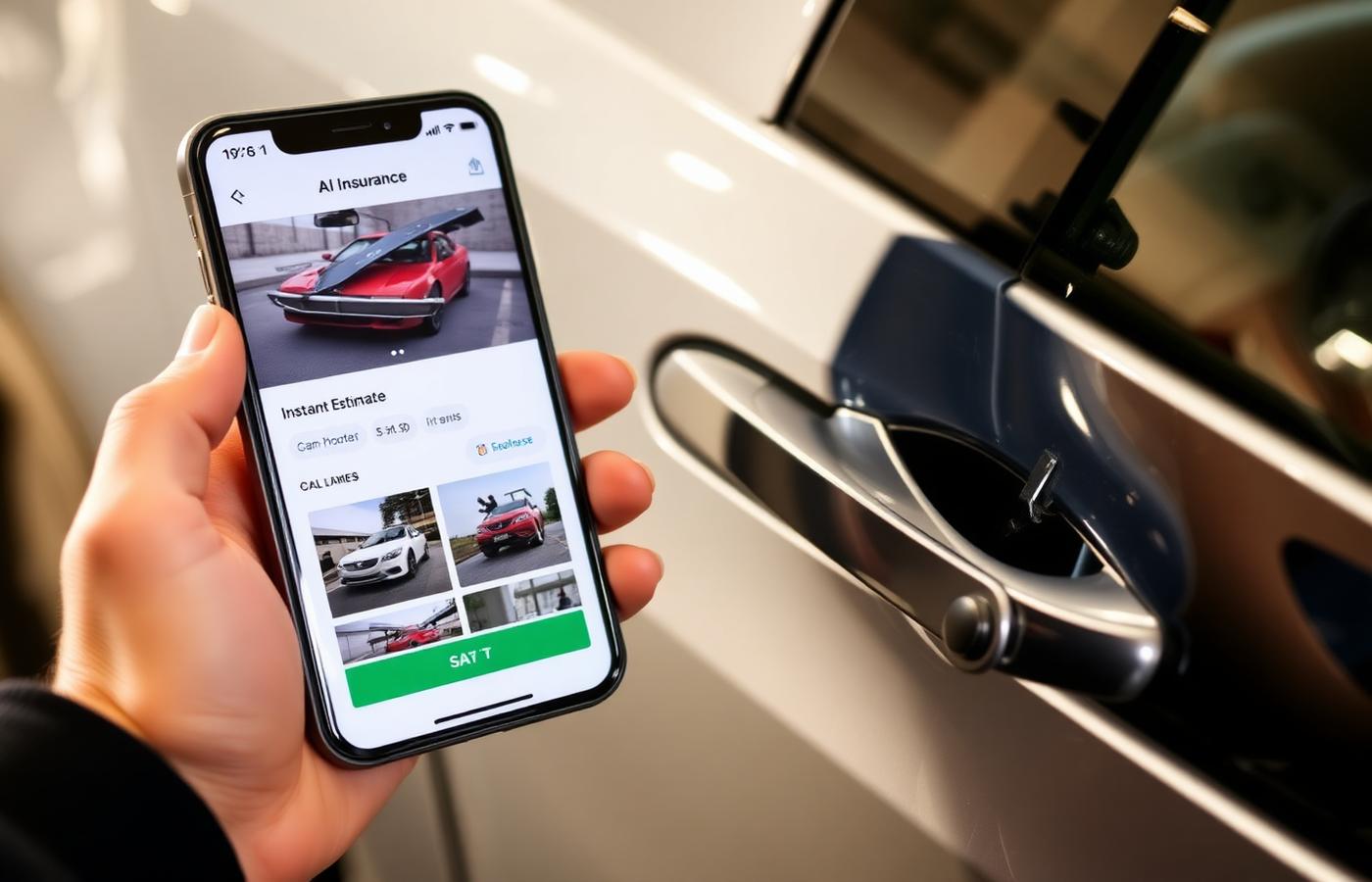
The new pipeline looks nothing like the clipboard-and-callback process most drivers remember. A typical 2026 claim flows like this:
- You report the crash in your insurer's app and upload photos or dashcam video.
- A computer-vision model classifies damage by panel, severity, and likely repair vs. replace.
- A pricing model pulls regional labor rates, OEM vs. aftermarket parts cost, and your policy terms.
- A liability model scores fault using telematics, GPS, and (if available) the other driver's data.
- Within minutes you get an offer — sometimes a one-tap "Accept & get paid today" button.
For minor cosmetic claims, accuracy has genuinely improved. For anything beyond a clean bumper scrape, the cracks show up fast.
Three places AI adjusters are shortchanging drivers
1. Hidden structural damage
Computer vision sees what the camera sees. It does not see a bent subframe, a cracked radiator support, or a compromised crumple zone behind an intact bumper cover. Photo-based estimates can miss damage that only an in-person teardown reveals, which is why a body shop's physical inspection sometimes comes back materially higher than an app's first offer.
2. Diminished value
Even a perfectly repaired vehicle loses resale value once a crash is logged on its history report. Diminished value claims are recognized in most states, but AI offers almost never include them by default — you have to ask, and you usually have to document it with a third-party appraisal.
3. Soft-tissue and delayed injuries
Algorithms are heavily biased toward "no injury" when no ambulance was called at the scene. Whiplash, concussions, and back strain that surface 48–72 hours later often get coded as unrelated unless you push back hard. If you were hurt at all, see a doctor before you click accept — and read our step-by-step accident checklist first.
What regulators are doing — and not doing
The NAIC adopted its Model Bulletin on the Use of AI Systems by Insurers in December 2023, setting expectations that insurers govern and document their AI use and provide consumer notice and human oversight — enforced through existing unfair-claims-practice laws. By early 2026, roughly two dozen states plus Washington, D.C., had adopted it, with variations. Regulators are also moving from policy to inspection, increasingly examining how insurers actually use these models in practice.
For now, the burden is still on the driver. The single most powerful word in an AI claim flow is the one the app does not show you: counter.
How to push back on an AI offer (without hiring a lawyer)
- Do not accept on the same day. Most apps hold the offer open for 7–14 days. Use them.
- Request a human adjuster in writing through the app's message thread. That message becomes part of your file.
- Get one independent body-shop estimate. Many shops will write one free for insurance purposes.
- Ask explicitly about diminished value if your vehicle is under 7 years old with low mileage.
- Document any symptoms within 72 hours and forward the medical record to the adjuster before signing a release.
The bigger picture
AI is not going away — and for low-severity claims it genuinely benefits drivers who would rather not spend three weeks on the phone. The risk is the asymmetry. Insurers have spent billions training models on a century of claims data. The driver has a phone, an aching neck, and a 90-second timer. Knowing where the algorithm is weakest is, for now, the most valuable consumer skill in auto insurance.
Frequently asked questions
Can I refuse an AI-generated insurance settlement offer?+
Yes. In every U.S. state you have the right to negotiate, request a human adjuster, and provide independent estimates before signing any release. The AI offer is an opening number, not a final one.
Will using AI to file my claim hurt my payout?+
Not by itself. The risk is accepting the first offer without review. Use the app to file quickly, then take 7–14 days to compare against an independent body-shop estimate and any medical findings.
Do I have to tell my insurer if I have dashcam footage?+
Most policies require you to cooperate with the investigation, which generally includes sharing relevant footage. But you control when and how — review the video before uploading, and never upload audio that contains an admission of fault.
What if the AI says I am at fault and I disagree?+
Request a human review in writing immediately, provide the police report, witness contacts, and any dashcam video. Algorithmic fault decisions can be reversed but only if you formally contest them within the appeal window stated in your policy.
Continue reading
Sources
Have you ever filed a car insurance claim?
Share your experience or send us a tip — we read every email, and your input helps shape what we cover next.
Send us your storyMore from Crash & Cover

Auto Insurance in 2026: Why Your Premium Is Still High Even as Increases Cool
Double-digit auto insurance hikes have finally cooled in 2026 — but premiums are still high. Here's what the real data shows, where rates are still rising, and the moves that actually lower your bill.
Crash & Cover Editorial Team · May 10, 2026 · 11 min

What Is an SR-22 — and When Do You Need One?
An SR-22 isn't a type of insurance — it's a certificate your insurer files with the state proving you carry minimum coverage. Here's who needs one, what it costs, and how long it lasts.
Crash & Cover Editorial Team · Jul 16, 2026 · 8 min

How to File a Claim Against the Other Driver's Insurance
If another driver caused your accident, you can file a third-party claim directly with their insurer. Here's how the process works, what to expect, and when to involve your own insurance.
Crash & Cover Editorial Team · Jul 3, 2026 · 8 min