Legal Rights & Advice
What Is Comparative Fault? How Being Partly at Fault Affects Your Car Accident Claim
In most states, sharing some of the blame for a crash doesn't end your claim — it just reduces it. Here is how comparative fault works, the three systems states use, and why insurers fight so hard to pin more fault on you.
By Crash & Cover Editorial Team · June 12, 2026 · 11 min read
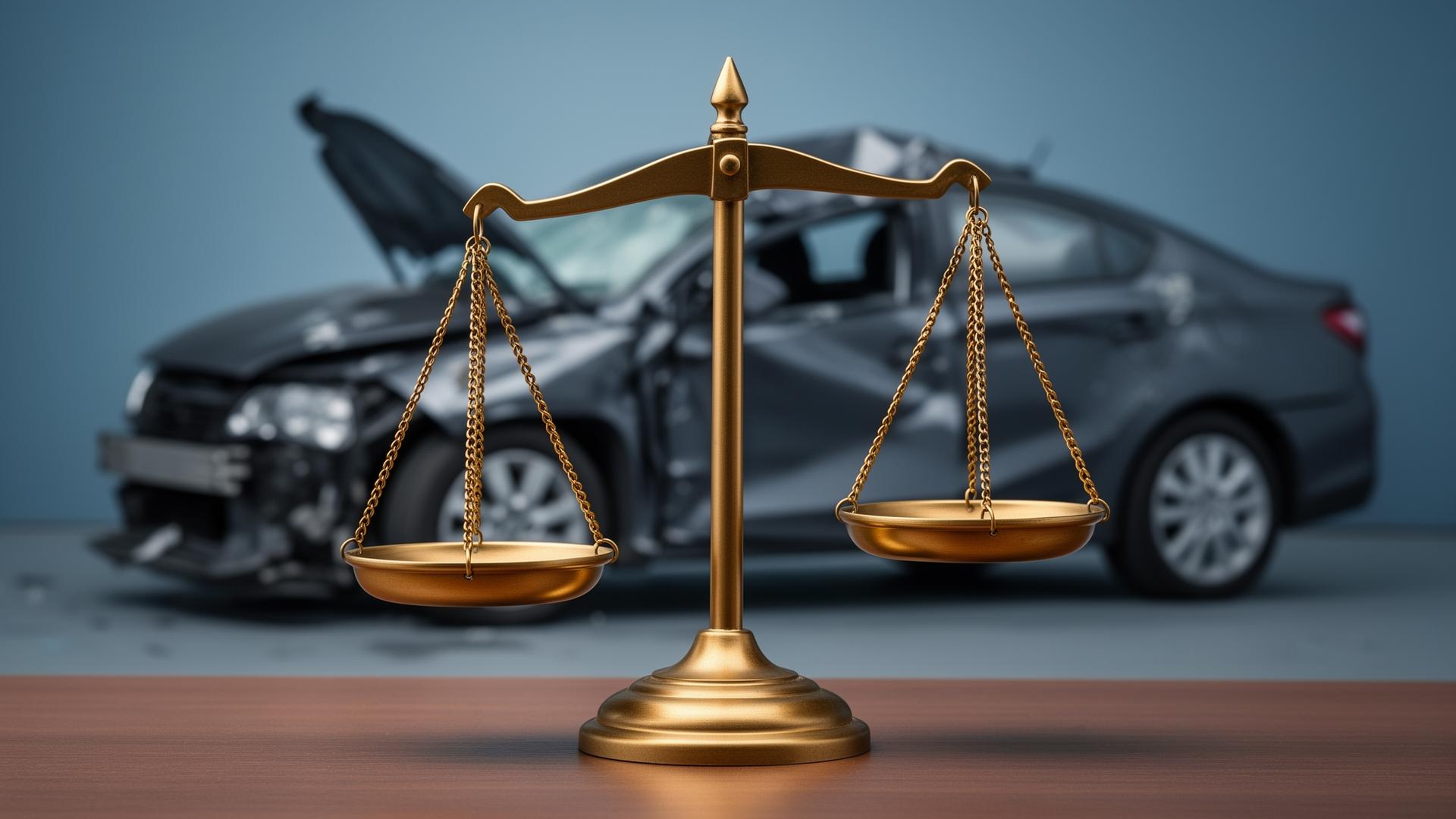
Quick answer: Comparative fault is the rule that decides how being partly responsible for a crash affects your compensation. In most states, your payout is simply reduced by your percentage of fault — if you're 30% at fault, you recover 70%. A small number of states are far stricter: under "contributory negligence" (Alabama, Maryland, North Carolina, Virginia, and Washington, D.C.), being even 1% at fault can bar you from recovering anything. Because so much money rides on the percentages, insurers often try to assign you more fault than you deserve.
Key takeaways
- In most states, partial fault reduces your payout rather than eliminating it.
- Three systems exist: pure comparative, modified comparative (a 50% or 51% bar), and contributory negligence.
- Under contributory negligence — used in just five places (Alabama, Maryland, North Carolina, Virginia, and Washington, D.C.) — even 1% fault can mean zero recovery.
- Under modified comparative (most states), you recover only if your fault is below the state's bar, and your award is then reduced by your share.
- Insurers push to raise your fault percentage to cut what they pay — so evidence (police report, photos, witnesses) matters.
What Comparative Fault Means
Car accidents often aren't 100% one person's fault. When more than one driver shares the blame, the law divides responsibility into percentages — for example, 70% to one driver and 30% to the other. "Comparative fault" (also called comparative negligence) is the framework that decides what those percentages mean for your compensation. The catch is that the exact rule depends on which state you're in, and the differences are dramatic.
The Three Systems States Use
Pure comparative negligence. You can recover damages no matter how much of the blame is yours, but your award is reduced by your percentage of fault. If you're 90% at fault on a $100,000 claim, you can still recover $10,000. About a dozen states use this approach, including California and New York.
Modified comparative negligence (used by most states). You can recover only if your share of fault stays below a set bar, and your award is then reduced by your percentage:
- Under a 50% bar, you recover only if you're less than 50% at fault.
- Under a 51% bar, you recover only if you're 50% or less at fault.
- Cross the bar, and you recover nothing.
Contributory negligence (the strict exception). In just five places — Alabama, Maryland, North Carolina, Virginia, and Washington, D.C. — being even 1% at fault can bar you from recovering anything, even if the other driver was 99% to blame. It's widely considered harsh, but it's still the law there.
(A few states have their own wrinkles — South Dakota, for instance, uses an unusual "slight versus gross" negligence rule.) Because these rules vary so much and occasionally change, it's important to confirm the rule in your own state rather than assume.
How It Reduces Your Payout
In a state that allows partial recovery, the math is straightforward: your total damages are reduced by your percentage of fault. Say your documented losses are $100,000 and you're found 20% at fault. You would recover $80,000 — your full damages minus your 20% share. The same crash could end very differently across state lines: at 60% fault you'd still recover something under pure comparative negligence, but nothing under either modified bar, and nothing in a contributory-negligence state even at 1%.
Why Insurers Push to Raise Your Fault Percentage
Every percentage point of fault assigned to you lowers what the insurer has to pay — and in strict states, enough fault erases your claim entirely. That financial incentive is exactly why an adjuster may steer you toward admitting fault, ask leading questions during a recorded statement, or suggest you were "partly responsible." It's a recognized move — we cover it as the comparative-fault nudge in our insurance adjuster playbook.
How to Protect Yourself
Because fault is assigned from the evidence, the best protection is to avoid handing the insurer ammunition and to preserve proof:
- Don't admit fault or speculate about what happened — say only what you directly observed. (See what to say, and not say, to an adjuster.)
- Preserve evidence that shows how the crash actually happened: the police report, photos of the scene and vehicles, witness names and contact info, and any dashcam footage.
- If fault is genuinely disputed and your claim is significant, an attorney can challenge an unfair fault percentage — see when to hire a car accident lawyer.
Check Your State's Rule
Whether you can recover at all — and how much — depends on which of the three systems your state uses and on the fault percentage assigned to you. Both are worth pinning down early, because they shape your entire claim. If you're unsure, your state's bar association or a licensed attorney can tell you which rule applies where you live.
The Bottom Line
In most of the country, being partly at fault doesn't end your claim — it just trims it in proportion to your share. But the rules range from forgiving (pure comparative) to unforgiving (contributory negligence), so your state matters enormously. Either way, the percentages are money, which is why protecting evidence and being careful about what you admit are some of the most valuable things you can do after a crash.
Frequently asked questions
Can I still get compensation if I was partly at fault?+
In most states, yes — your payout is reduced by your percentage of fault. But in five places (Alabama, Maryland, North Carolina, Virginia, and Washington, D.C.), being even slightly at fault can bar you from recovering anything.
What's the difference between comparative and contributory negligence?+
Comparative negligence reduces your recovery by your share of fault, so you can still collect something. Contributory negligence, used in a few states, bars you from collecting anything if you bear any fault at all.
What is the 50% versus 51% bar rule?+
Both are forms of modified comparative negligence used by most states. Under a 50% bar you can recover only if you're less than 50% at fault; under a 51% bar you can recover if you're 50% or less at fault. Above the bar, you recover nothing.
How is my percentage of fault decided?+
From the evidence — the police report, photos, witness statements, traffic laws, and sometimes accident reconstruction. Insurers, and ultimately a judge or jury, assign the percentages, which is why preserving evidence matters.
Why does the insurance company say I'm more at fault than I think?+
Because every percentage point of fault they assign to you lowers what they have to pay, and in strict states enough fault eliminates your claim. That's why adjusters may push you to admit fault or answer leading questions.
Continue reading
Sources
Have you ever filed a car insurance claim?
Share your experience or send us a tip — we read every email, and your input helps shape what we cover next.
Send us your storyMore from Crash & Cover

What Is an SR-22 — and When Do You Need One?
An SR-22 isn't a type of insurance — it's a certificate your insurer files with the state proving you carry minimum coverage. Here's who needs one, what it costs, and how long it lasts.
Crash & Cover Editorial Team · Jul 16, 2026 · 8 min

What Is a Reservation of Rights Letter? What It Means for Your Car Accident Claim
A reservation of rights letter can be alarming to receive and confusing to read. It is not a denial — but it is a signal that the insurer is questioning whether your claim is covered. Here is what it actually means, why insurers send them, and how people respond.
Crash & Cover Editorial Team · Jun 12, 2026 · 8 min

How to Fight a Denied Car Insurance Claim and Actually Win
A claim denial is not the end — it's an opening position. Here's the step-by-step playbook for appealing a denied car insurance claim and actually winning.
Crash & Cover Editorial Team · May 15, 2026 · 14 min